The mills and fulling mills
The museum section dedicated to hydraulic factories in the Morano countryside offers a historical overview of the hydraulic mills that, in the past, played a crucial role in the rural economy. Linked to the section on natural resources, with particular focus on water, this part of the museum documents the importance of water not only in agriculture but also as a driving force used in mills and fulling mills.
Mills and Fulling Mills: Tradition and Innovation
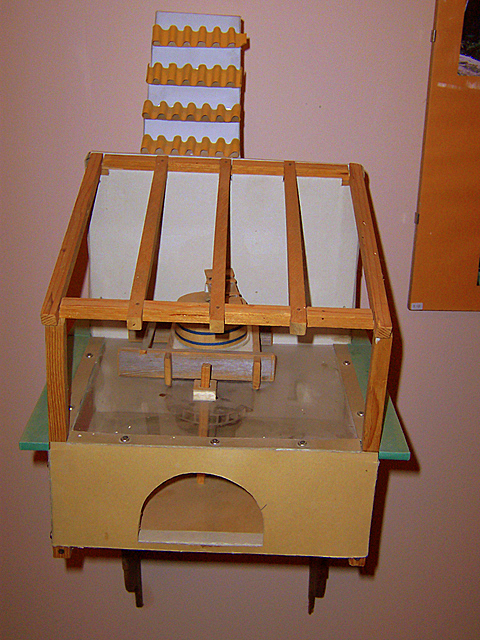
The hydraulic factories, including water mills and fulling mills, have been essential in local communities. Mills, in particular, occupy a prominent place in the museum section, as evidenced by the extensive documentation displayed, including historic photographs, thematic maps, drawings, and models that tell the story of these facilities.
Types of Water Mills in the Morano Area
The water mills in the Morano countryside followed the same model as the mills in other towns of the Coscile basin. The most common model was the Greek mill or Scandinavian mill, characterized by a single vertical drive shaft, with the water wheel fixed at the bottom and the rotating millstone above the stationary one. Although this system was basic, it maximized the use of water power and had the advantage of being built primarily from wood, without the need for complex gears, unlike the Vitruvian mill.
Most Significant Water Mills in the Area
In the Morano area, six water mills operated in the past. Two of them deserve particular attention:
- Mainieri Mill: A significant example of a traditional water mill.
- Scorza Mill: Located in the Fineta area, at the confluence of the Piana stream into the Coscile river. This mill, larger than average, is partially ruined but still preserves the canals in excellent condition, providing a remarkable example of hydraulic engineering.
The other four mills included:
- Rocco Mill: Located in Contrada Foce, it is attached to a beautiful rural complex belonging to the Rocco family.
- Saint Rocco Mill: Built in the 19th century by the Rosito and Aronne families, it is near the rural church of San Rocco.
- Fineta Mill and Vado Mill: Both larger mills belonging to the Ponzi and Di Noia families. These mills are partially ruined. The Di Noia Mill has been converted into a house, while only the structure remains of the Rocco Mill.
The Legacy of Hydraulic Factories
The mills and fulling mills of the Morano countryside not only tell the story of a time when water was a vital resource for daily life but also symbolize the rural engineering that defined the region. Today, these mills represent an important cultural and historical asset to be preserved and appreciated.