
The Museum of the History of Agriculture and Pastoralism
The museum is housed in Palazzo Salmena. It is a museum of material culture history, established in the mid-1980s through the expansion of the historical exhibition Farmers and Shepherds in Morano: Between Past and Present, designed and created a few years earlier by Francesco Mainieri in collaboration with the local Cultural Animation Group and under the patronage of the Municipality’s Department of Culture.
This museum is truly unique, offering an equally distinctive experience. In addition to displaying physical artifacts, it also presents archival materials, written sources, maps, and historical photographs. These elements sometimes complement the interpretation of the artifacts but often – and most frequently – hold their own independent documentary and museum significance.
The museum, and the earlier exhibition, were born from interdisciplinary research aimed at fostering a well-documented reflection on the agro-pastoral reality of the past in the Morano area and the Pollino region. The goal was to reconstruct its defining characteristics and highlight its most authentic values.
The museum’s collection is vast, consisting of diverse testimonies, all of great historical and documentary significance.
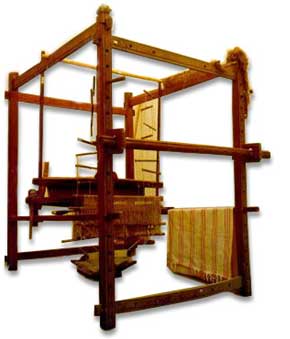
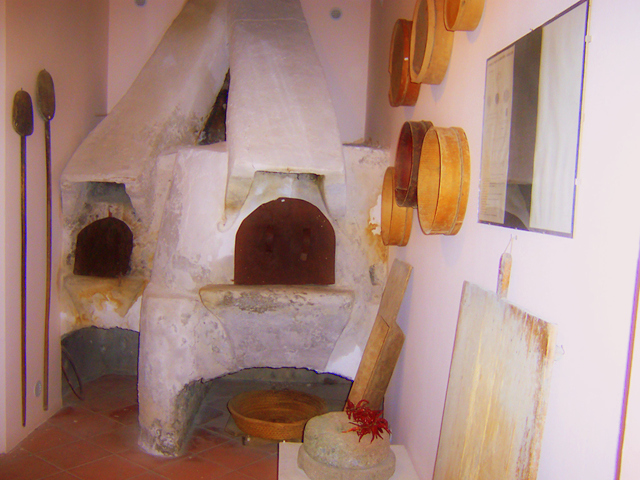
Interdisciplinary research
The research began over twenty years ago. In the research, the finding and collection of objects have assumed a priority value: work tools and instruments, household utensils, etc. When it began, it was in a certain sense already late, as many objects had already disappeared. The objects were found with patience and tenacity not only in Morano but also in other towns in the area. Farmers and shepherds provided, together with the objects, invaluable information, without which it would not have been possible to develop the illustrative texts that accompany the exhibition. To ensure rigorous contextualization, the collection of materials was integrated with the historical analysis of the natural and agricultural context and the consideration of more specifically economic-social factors, such as the composition and dynamics of the population employed in agriculture, the structure of agricultural ownership, forms of management of land and livestock, etc.
The headquarters of the Museum
The museum is located in Palazzo Salmena, which belonged to one of the most prominent families in the city and is one of the most interesting ancient buildings in the historic center. It is located in the eastern part of the historic centre, not far from the fifteenth-century church of San Nicola and is on the edge of what is presumed to have been the third city wall of the medieval village. Its construction, or its reconstruction, probably dates back to the eighteenth century. However, it is to be believed that the Salmena family previously had a house that was perhaps less imposing but equally located in that place. The building is spread over three floors. In the garden below there is a beautiful stone fountain, originally powered by the sixteenth-century aqueduct. In 2002, the Museum of the history of agriculture and sheep farming was set up on two floors of the building.
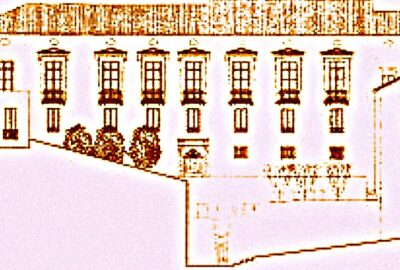
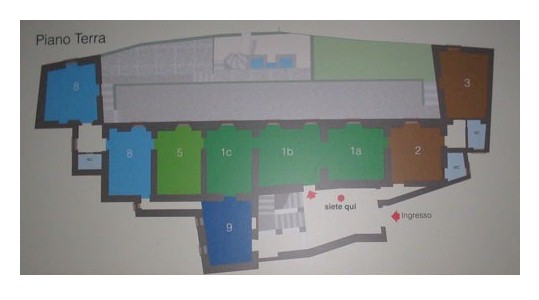
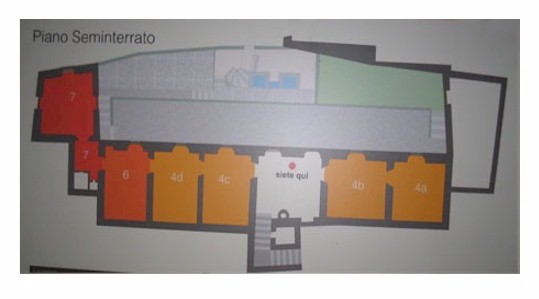
The museum is divided into two levels: the ground floor and the basement. On the ground floor there are 9 rooms, and another six in the basement. The objects are related to peasant work, rural construction, rural work, sheep farming.
In the section, some of the most common means of transport used by farmers in agricultural work are presented and described, with the help of photographic and archive materials.
Naturally, the ox cart could not be missing, particularly widespread among the lower strata of the rural population. The one used in the Morano countryside is the typical Calabrian fork cart, that is, a cart usually with two wheels, naturally made of wood, with iron rims. A few four-wheeled ox carts have been used since the 1930s by farmers of Marche origin who settled in the area.
Less widespread was the wooden tow, with two shafts and very large wheels, which was ill-suited to the particular structure of the town.
Finally, the carriage was mainly used by the wealthiest farmers and, naturally, by large landowners.