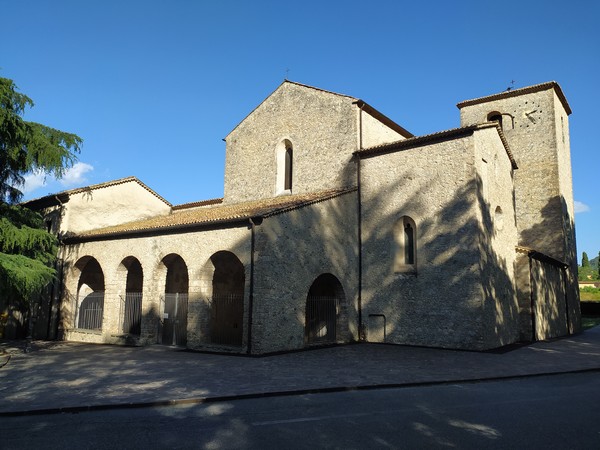
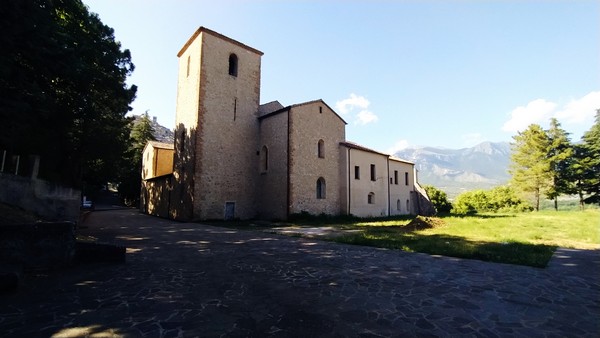
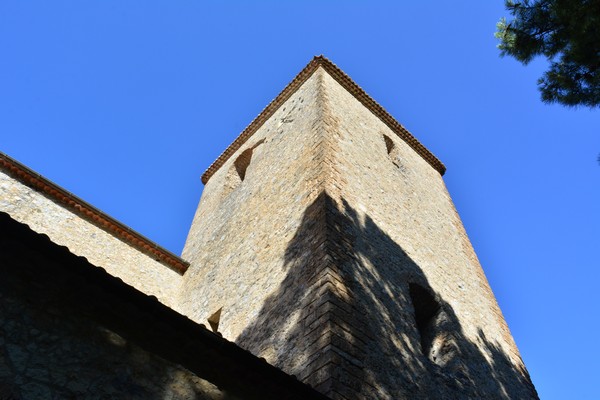
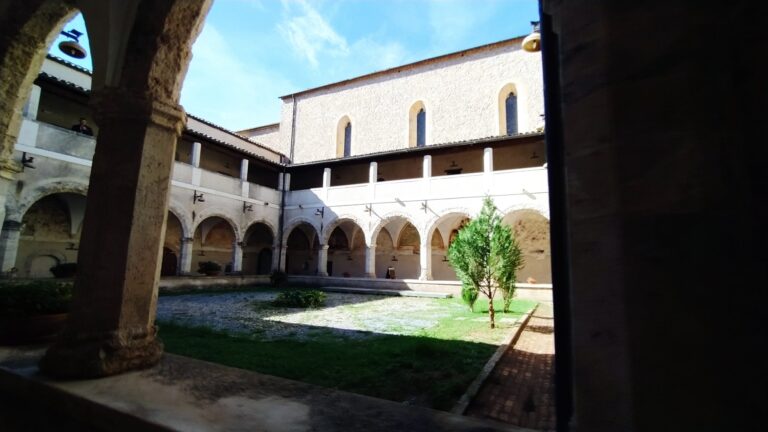
The Saint Bernardino complex marks the lower boundary of Morano Calabro’s historic center. Thanks to its strategic location and architectural value, it serves as an ideal starting point for exploring the town.
This late Gothic gem was founded in 1452 by Pietro Antonio Sanseverino, feudal lord of Morano, with the authorization of Pope Nicholas V, and was entrusted to the Observant Franciscans.
This event was once commemorated by a 17th-century inscription at the convent entrance: “Monasterium hoc fundatum ac totaliter confectum ab illustrissimo Antonio Sanseverino sub titulo B. Bernardini auctoritate Nicolai V summi Pontificis sub data 31 maii, A.D. 1452.”
The Architecture and Artwork of the Complex
Consecrated on April 23, 1485, by Bishop Rutilio Zenone of San Marco, the church underwent several embellishments between 1513 and 1539. Some of its most significant features include:
The wooden keel ceiling (1538), crafted by Venetian artisans.
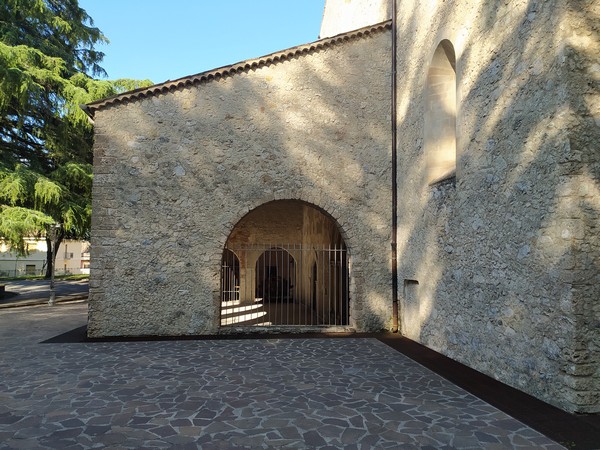
The lectern (1536) and fragments of frescoes in the portico, dating back to 1499.
The lunette frescoes in the cloister, completed between the late 16th century and 1738.
17th-century wooden works, including the pulpit (1611), the choir (1656), and the statue of Saint Bernardino.
The “Christ on the Cross” (15th century), a remarkable wooden sculpture placed beneath the triumphal arch.
Baroque Transformations: A New Look for the Complex
During the Baroque period (1717-1843), the church and convent underwent significant renovations that profoundly altered their appearance. Elaborate stucco decorations, finely sculpted altars, and high-quality frescoes enriched the interiors, creating a theatrical elegance typical of the era. These modifications transformed the complex into a perfect blend of late Gothic austerity and Baroque opulence, marking a new artistic and cultural phase in its history.
From Suppression to Civic Use: The Convent’s Turbulent History
During the Napoleonic era, religious orders were dissolved, and their properties confiscated. In 1811, the monastery was suppressed. Later, in 1830, it was converted into a municipal prison by decree of the Kingdom of the Two Sicilies. In 1845, it was granted to the Bishop of Cassano and repurposed as a summer diocesan seminary.
After the unification of Italy, the property returned to the municipality of Morano, which established an elementary school within the complex.
Between the late 19th century and the post-war period, the Saint Bernardino complex fell into severe disrepair. In 1898, a fire severely damaged one wing of the convent. In 1920, the renowned archaeologist Paolo Orsi urged the restoration of the Vivarini polyptych, a project carried out in 1923 by Riccardo De Bacci Venuti, under the supervision of the Superintendence for Medieval and Modern Art of Naples.


 Previous Post
 Next Post